
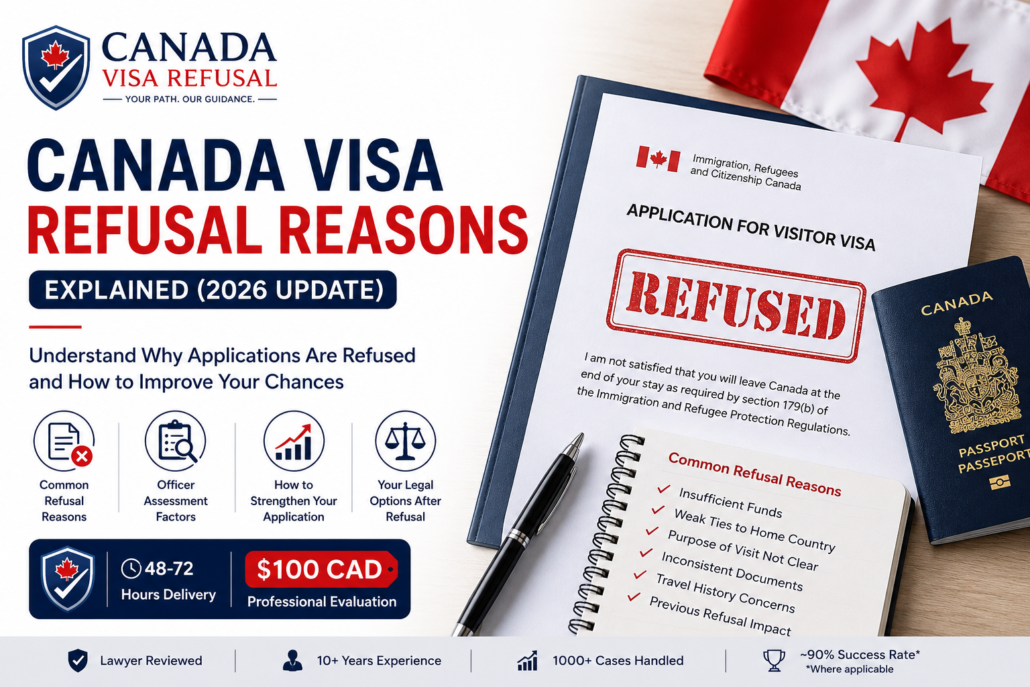
Canada Visa Refusal Reasons Explained (2026 Update)
A Canada visa refusal means an immigration officer was not convinced that you met the requirements of the immigration program you applied under. In 2026, the most common reasons for refusal include insufficient proof of finances, weak ties to your home country, unclear travel purpose, inconsistent documentation, and concerns about your intention to leave Canada after your authorized stay.
If your application has been refused, it does not necessarily mean you cannot obtain a Canadian visa in the future. Understanding the exact refusal reasons is the first step toward building a stronger application or determining whether judicial review may be appropriate.
What Does a Canada Visa Refusal Mean?
A Canada visa refusal occurs when an officer from Immigration, Refugees and Citizenship Canada determines that the evidence submitted does not satisfy the requirements of the relevant immigration program.
A refusal is not the same as a ban.
In many situations, applicants can:
- Reapply with a stronger file
- Submit additional evidence
- Request GCMS notes
- Seek legal review
- Pursue judicial review when appropriate
The key is understanding why the refusal occurred.
Top Canada Visa Refusal Reasons in 2026
1. Insufficient Financial Evidence
Financial concerns remain one of the leading refusal reasons.
Officers must be satisfied that applicants can support themselves during their stay in Canada.
Common issues include:
- Low bank balances
- Sudden large deposits
- Unexplained transactions
- Inconsistent financial records
- Weak sponsor documentation
How to Fix It
Provide:
- Six months of banking history
- Stable income evidence
- Employment records
- Tax documents
- Clear explanation of large deposits
2. Weak Ties to Home Country
Officers must believe you will leave Canada when your authorized stay ends.
Weak ties may include:
- Unstable employment
- No property ownership
- Limited family connections
- No ongoing business activities
Strong Tie Examples
- Permanent employment
- Business ownership
- Property ownership
- Family responsibilities
- Educational commitments
3. Purpose of Visit Not Convincing
Many visitor visa refusals occur because the officer does not clearly understand the purpose of the trip.
Examples:
- Generic invitation letters
- Poor travel itineraries
- Lack of supporting evidence
- Unrealistic travel plans
How to Strengthen Purpose of Visit
Include:
- Detailed travel itinerary
- Hotel reservations
- Event registrations
- Invitation letters
- Supporting financial evidence
4. Previous Travel History Concerns
Applicants with limited international travel may face additional scrutiny.
A lack of travel history does not automatically cause refusal, but officers often evaluate whether applicants have previously complied with immigration rules.
What Helps
- Previous visas
- Entry and exit stamps
- Evidence of compliance with visa conditions
- Strong supporting documents
5. Inconsistent or Contradictory Information
Immigration officers carefully compare all documents.
Common inconsistencies include:
- Different employment dates
- Conflicting financial information
- Mismatched travel purpose
- Contradictory family information
Even small discrepancies can damage credibility.
6. Weak Study Plan (Study Permit Refusals)
Study permit refusals continue to affect thousands of international students.
Common concerns include:
- Unclear educational goals
- Weak statement of purpose
- Program not related to previous education
- Questionable return plans
Strong Study Plan Elements
- Clear career objectives
- Logical academic progression
- Explanation of program choice
- Future employment plans
7. Employment Concerns
Work permit and visitor visa applicants often receive refusals when employment documentation is weak.
Examples include:
- Missing employer letters
- Inadequate proof of income
- Unclear job duties
- Recently created employment records
8. Misrepresentation Concerns
Misrepresentation is among the most serious refusal grounds.
Examples include:
- Fake documents
- Altered bank statements
- False employment records
- Incorrect personal information
Consequences may include:
- Refusal
- Multi-year inadmissibility
- Future immigration complications

